Code Wiki
Generates and maintains code documentation automatically by analyzing source code and commit history.
Are you the owner?
Claim this tool to publish updates, news and respond to users.
Sign in to claim ownership
Sign InDescription
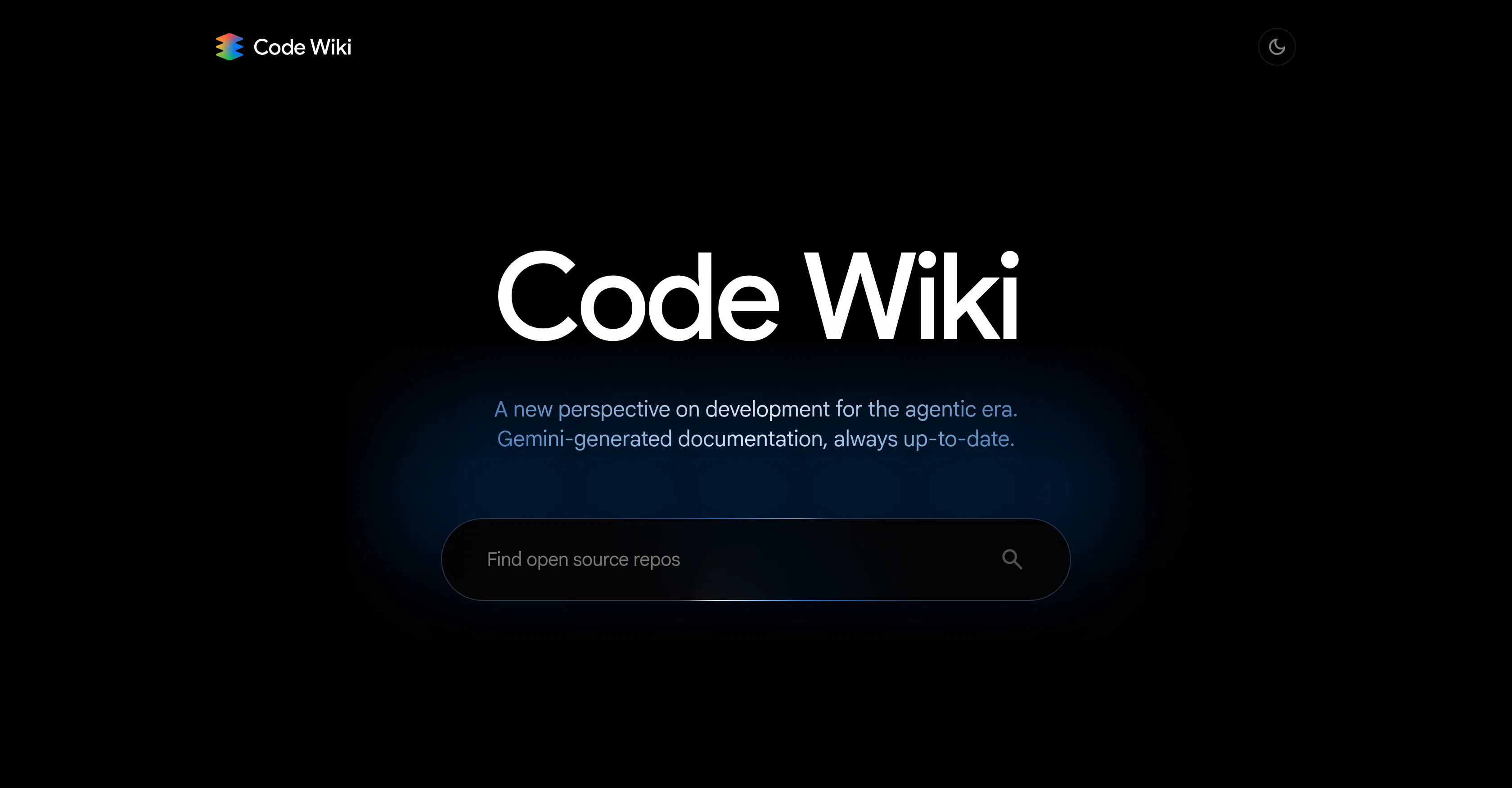
Code Wiki is an AI-powered tool developed by Google that automatically creates and updates living documentation for software projects. Its core value lies in eliminating the manual, tedious, and often outdated process of writing documentation by intelligently analyzing a codebase and its development history. It synthesizes information from source files, commit messages, and issue trackers to produce comprehensive, context-aware documentation that evolves alongside the code itself.
Key features: The tool automatically generates initial documentation for entire repositories or specific modules by parsing code structure and comments. It continuously updates documentation in response to new commits, highlighting changes and their rationale. It can answer natural language questions about the codebase, acting as an interactive knowledge base. It supports linking documentation to specific lines of code and relevant pull requests, providing deep traceability. It also offers summarization of complex code changes and can identify undocumented or recently modified code sections that need attention.
What makes Code Wiki unique is its deep integration with the software development lifecycle, particularly within the Google ecosystem, though it supports Git repositories broadly. It uses advanced language models to understand code semantics and developer intent beyond simple syntax parsing. The tool operates as a web-based platform, requiring no local installation for basic use, and is designed to integrate seamlessly with version control systems like Git. Its technical approach focuses on creating a 'living' document that is a first-class artifact of the development process, not a secondary, neglected byproduct.
Ideal for development teams, engineering managers, and open-source maintainers who struggle with documentation debt. Specific use cases include onboarding new developers to a complex codebase, maintaining audit trails for regulatory compliance, ensuring knowledge retention when team members leave, and improving code review processes by providing immediate context for changes. It is also valuable for solo developers or small teams who want to establish professional documentation practices without significant time investment.